When to Replace Suspension Bushings on Your Rig
By Admin
Oct 26, 2026
A truck that clunks over every driveway, wanders across rough pavement, or feels loose when the trail gets choppy is not always asking for new shocks. Sometimes the weak link is smaller and easier to overlook. When it is time to replace suspension bushings, your rig is telling you that the parts meant to control suspension movement are no longer doing their job.
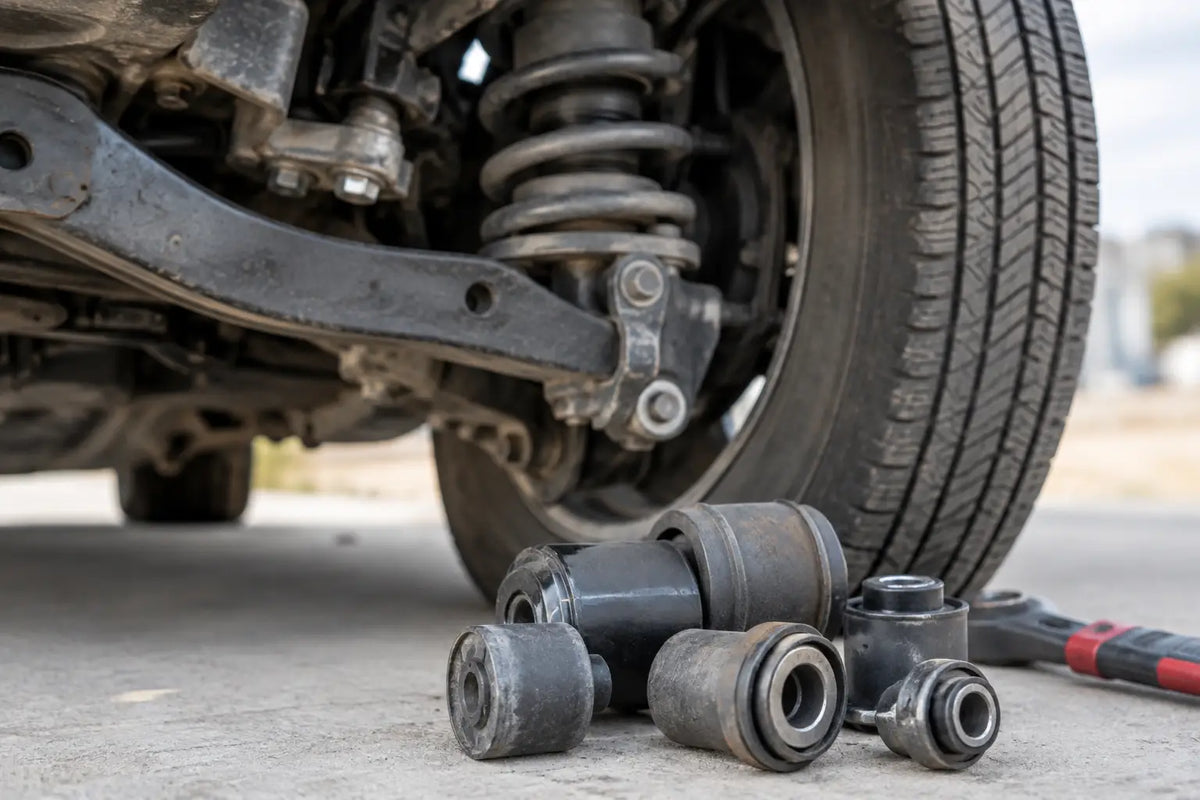
Bushings sit between suspension components and the frame or axle mounts. They allow controlled movement while keeping metal parts from grinding, shifting, and hammering each other. On a daily-driven Jeep, truck, or SUV that sees Texas heat, potholes, towing, mud, and trail miles, they work hard. Eventually, rubber cracks, sleeves corrode, polyurethane dries out, and mounting holes can start taking a beating.
When to Replace Suspension Bushings
The obvious sign is a dull clunk, pop, or knock when you brake, accelerate, turn, or hit uneven ground. That sound can come from several places, so do not order parts based on noise alone. Sway bar links, ball joints, tie rods, loose skid plates, shocks, and even cargo in the bed can make similar sounds.
Look for movement and damage at the bushings themselves. Cracked rubber, missing chunks, a bushing that has separated from its outer shell, or a control arm that can visibly shift in its mount are all strong signs the part is done. Rust-colored dust around a sleeve, shiny metal where it should not be rubbing, and an off-center inner sleeve also point to wear.
Road manners matter, too. Worn control arm bushings can make braking feel unsettled, let the steering wheel pull under load, or create a vague feeling that alignment never fully fixed. On a solid-axle Jeep or heavy-duty truck, worn track bar bushings can contribute to steering shake and axle movement. On independent front suspension trucks and SUVs, tired lower control arm bushings can affect alignment angles and tire wear.
Do not ignore uneven tire wear, but do not blame bushings automatically. Cupping often involves shocks or balance issues. Feathering can be alignment or steering wear. Bushings are one item in a system, and a proper inspection saves you from replacing good parts while the real problem keeps chewing through tires.
Heat, age, and hard use change the schedule
There is no magic mileage for every rig. Factory rubber bushings on a pavement-only vehicle may last well past 100,000 miles. A lifted truck that tows, runs oversized tires, sees washboard roads, and spends weekends on rocky trails can wear them out much sooner.
Age matters as much as mileage. Rubber hardens and cracks with time, especially after years of heat cycles and exposure to oil, road salt, and trail grime. If you are rebuilding a 10- to 20-year-old off-road vehicle, assume every original suspension bushing deserves a close look before the next big upgrade.
Diagnose the Problem Before You Buy Parts
Start with the vehicle safely supported at ride height when possible. Suspending the axle or control arm at full droop can unload a bushing and hide the movement you are trying to find. Use a bright light, inspect both sides, and compare what you see. One damaged bushing often means its partner has been carrying extra load.
A careful pry-bar check can reveal excessive movement, but do not get reckless. You are looking for separation between the sleeve and rubber, or uncontrolled movement in the mount, not trying to bend a control arm with a five-foot bar. Have a helper turn the steering wheel, apply the brakes, or shift between drive and reverse with the vehicle secured while you watch for component movement.
Pay attention to the hardware, too. A loose bolt can mimic a failed bushing. So can a bolt that was tightened while the suspension hung at full droop. Rubber bushings are designed to twist through their operating range. If they are torqued with the axle hanging, they stay preloaded at normal ride height and can fail early.
For lifted rigs, inspect the whole geometry package. A control arm bushing replacement will not cure poor caster, an improperly centered axle, a worn track bar, or a driveshaft angle problem. Build the system right instead of throwing one part at a bigger issue.
Choosing Bushings for How You Actually Drive
The right bushing material depends on what your vehicle does between trail runs. Harder is not always better, and a race-focused choice can make a daily driver louder and harsher than expected.
Rubber is quiet and forgiving
Quality rubber bushings are often the best choice for stock or mild builds that spend most of their lives on the street. They isolate vibration well, reduce noise, and provide the controlled compliance engineers intended. They are not flashy, but they work.
Rubber makes sense for a daily-driven F-150, Silverado, Ram, Tacoma, 4Runner, or Wrangler that needs to stay comfortable on the highway and handle family, work, or towing duty. The trade-off is that rubber can degrade faster under heavy abuse, oil exposure, and big suspension movement.
Polyurethane sharpens response, with trade-offs
Polyurethane is firmer than rubber and can improve steering feel and suspension response. It handles oil and weather better than many factory rubber compounds, which makes it a popular option for off-road builds.
The cost is more vibration and a higher chance of squeaks if the bushings are not properly lubricated and maintained. On a vehicle that sees daily commuting, that added noise can get old fast. Use the correct grease, follow the manufacturer instructions, and understand that some poly bushings need periodic attention.
Flex joints and serviceable joints belong on serious builds
Long-arm kits, high-articulation suspensions, and dedicated trail rigs often use rebuildable flex joints, heims, or jointed control arms instead of conventional bushings in key locations. These allow more articulation and can keep suspension movement controlled through a wider range of travel.
They also require inspection and maintenance. A joint that is perfect for a rock-crawling Jeep may transfer more noise to the cab and need more upkeep than a rubber-bushed arm. Match the component to the mission. A weekend wheeler that still drives three hours home needs a different answer than a trailer-only crawler.
How to Replace Suspension Bushings Without Creating New Problems
Some bushing jobs are straightforward. Sway bar bushings and certain shock bushings can be handled with basic hand tools. Pressed-in control arm bushings, leaf spring eye bushings, and axle-side bushings can be a different level of work entirely.
Corrosion is usually the fight. Sleeves seize to bolts, bolts seize inside sleeves, and old bushings may need to be pressed, cut, or burned out. Heat and cutting tools can help, but they can also damage nearby brake lines, fuel lines, wiring, paint, and powder coat. Never use an open flame near fuel or brake components, and do not gamble with a vehicle supported only by a jack.
If the bushing is pressed into an arm, remove the arm and use the correct press tools. Hammering on a control arm can bend it, deform the bushing bore, or damage a new bushing before the vehicle ever leaves the garage. In some cases, replacing the complete control arm is the smarter move. It can save labor and gives you fresh ball joints or hardware where applicable.
Before final torque, set the suspension at normal ride height or simulate that position with jack stands under the axles or control arms. Torque every fastener to the vehicle or component manufacturer specification. Then get an alignment when the work affects control arms, cam bolts, track bars, or any component that changes axle or wheel position.
At NTX Offroad, we see plenty of builds where a small worn bushing was the difference between a solid-feeling rig and one that felt sketchy on the highway. Good parts matter, but correct fitment, installation, and torque procedure matter just as much.
After the Install: Check the Whole System
Take a short drive first. Listen for new noises, confirm the steering wheel is centered, and check that nothing contacts at full lock or through suspension travel. Recheck hardware after the first heat cycle and again after a trail day, especially on lifted vehicles or freshly installed suspension components.
Replacing bushings is not the most glamorous upgrade in the catalog, but it is one of the upgrades you feel every mile. Get the right material, fix the real source of play, and your truck, Jeep, or SUV will track straighter, ride tighter, and be ready for the next rough road without excuses.