Best Winch Accessories for Serious Recovery
By Admin
Oct 18, 2026
A winch mounted behind a bumper is not a complete recovery setup. It is one powerful tool that can become dangerous, damaged, or useless without the right supporting gear. The best winch accessories help you control the pull, protect the line, rig safely, and get a stuck truck, Jeep, or SUV moving without turning a bad trail day into a worse one.
Recovery gear is not where you buy the cheapest option and hope for the best. Mud, rocks, steep grades, dead batteries, and off-camber pulls expose weak links fast. Build your kit around the way you actually wheel, then learn how every piece works before you need it.
Start With the Gear That Connects Everything
The winch line may do the pulling, but the rigging determines whether the load is controlled. A quality recovery setup starts with properly rated connection points and hardware that match your vehicle, winch capacity, and expected recovery loads.
Recovery shackles and soft shackles
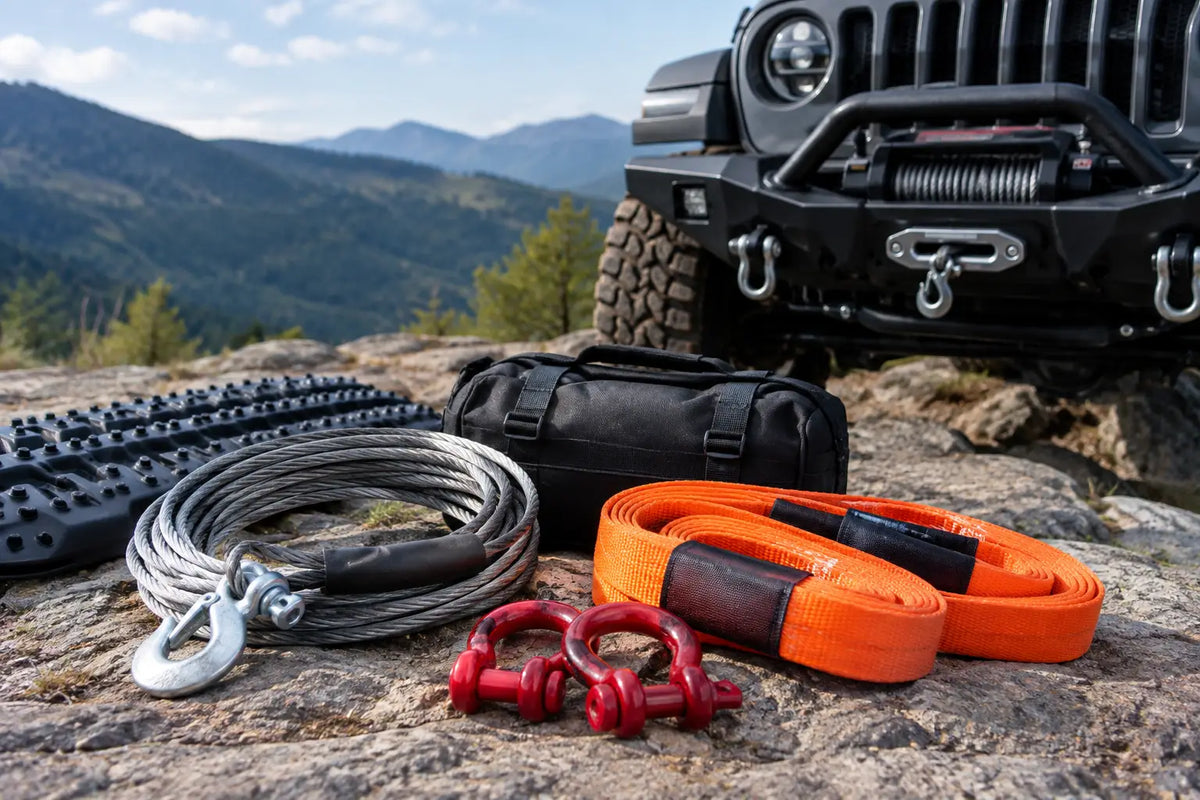
A pair of rated recovery shackles belongs in every recovery bag. Traditional steel D-ring shackles are proven, durable, and useful for connecting a recovery strap, tree saver, snatch block, or winch hook to a rated recovery point. Look for a marked working load limit and inspect the pin threads before every trip.
Soft shackles are lighter, easier to store, and especially useful with synthetic winch rope. They do not rattle against a bumper, and they are less likely to become a heavy projectile if something fails. That said, synthetic rope can be damaged by sharp edges, heat, and abrasion. Use soft shackles where the contact surface is smooth and appropriate. Steel hardware still has a place when the job calls for it.
Do not hook a winch line onto a tow ball. Do not use a random factory tie-down point. Those are not recovery points, and a failure under load can hurt somebody fast. Your recovery point needs to be rated and mounted to a structure built to carry the force.
A closed-system winch hook or recovery thimble
A standard open hook works, but it can slip off a shackle or recovery point if the line goes slack during an uneven pull. A closed-system hook, often used with a safety latch or locking-style connection, gives the setup more security. Some experienced wheelers also run a recovery thimble and soft shackle setup with synthetic line to eliminate the heavy hook altogether.
There is no one answer for every rig. The right choice depends on your bumper, line type, recovery points, and how you use the vehicle. What matters is that the connection stays secure and is compatible with the gear around it.
Best Winch Accessories for Line Control
Winch line is expensive. More importantly, it is the part holding the load. Protecting it should be standard practice, especially if your truck sees rocky trails, wooded ranch roads, or regular recovery duty.
Winch line dampener
A winch line dampener is simple gear with a serious purpose. Place it over the middle section of a tensioned winch line to help reduce recoil if a line, shackle, or connection fails. It is not magic and it does not make an unsafe pull safe, but it is a smart layer of protection.
A heavy recovery blanket, purpose-built dampener, or packed recovery bag can work. Use one whenever the line is under meaningful load, and keep everyone outside the danger zone. Nobody should stand near, step over, or straddle a live winch line.
Winch rope chafe guard
Synthetic rope is strong, light, and easy to handle, but it hates abrasion. A chafe guard protects the line where it crosses rough bark, rock edges, bumper corners, or other surfaces that can cut fibers. If you run synthetic line, this accessory earns its spot in the bag.
Even with a guard, reroute the pull if the rope is riding hard against a sharp edge. A chafe guard buys protection, not permission to drag a loaded line across anything you want.
Hawse or roller fairlead
Your fairlead should match your winch line. Synthetic rope pairs with an aluminum hawse fairlead because its smooth, broad opening is easier on the rope. Steel cable is commonly used with roller fairleads designed to guide cable across changing pull angles.
Check the fairlead for grooves, burrs, cracks, and damage after hard use. A rough fairlead can destroy synthetic rope one strand at a time. If the rope looks fuzzy, flattened, cut, or heat-damaged, take it out of service until you can inspect it properly.
Carry a Snatch Block for Difficult Pulls
A snatch block is one of the most useful accessories for real recovery work. It lets you redirect the winch line around an obstacle, change the direction of pull, or create a double-line pull for more mechanical advantage. When your rig is buried to the axles or hung up on a ledge, that extra control matters.
A double-line pull can reduce the load placed on the winch while increasing pulling power, but it also requires more line and adds rigging complexity. The block, shackles, anchor point, and mounting point all need to be rated for the forces involved. A snatch block is not a shortcut for undersized gear.
Practice setting one up in the driveway. The trail is a bad place to figure out how to route a line while rain is coming down and your buddy is stuck in a muddy rut.
Protect the Anchor With a Tree Saver Strap
When a tree is your only anchor, use a tree saver strap. This wide, short strap spreads the load around the trunk and prevents your winch rope or cable from biting directly into bark. It protects the tree and gives you a better, more controlled anchor point.
Never wrap a winch line around a tree and hook it back onto itself. That can damage the line, harm the tree, and create a poor connection. A dedicated tree saver, paired with rated shackles, is the right setup.
For rocks, boulders, or other natural anchors, take a hard look at what you are attaching to. If it can shift, crack, roll, or pull loose, it is not a reliable anchor. The force from a winch recovery can surprise people who have only used straps for light pulls.
Do Not Forget Power and Control
A winch is only useful if it has power. Check your battery health, cable connections, grounds, and charging system before a trail run. A weak battery or corroded terminal can leave a perfectly good winch dead when you need it most.
A wireless remote is convenient when you need to stand clear and watch the line, but a wired remote remains a smart backup. Wireless units need charged batteries and can be affected by damage, interference, or simple bad luck. Keep the wired controller protected in the cab or recovery kit.
A winch isolator or battery disconnect is another worthwhile upgrade for rigs that see regular off-road use. It gives you a way to cut power to the winch when it is parked or being serviced. Proper wiring, fuse protection where applicable, and clean routing are part of the build. Do not run cables where they can rub through on sharp metal or get cooked by exhaust heat.
Build the Recovery Bag Around Your Vehicle
The best recovery bag is organized enough that you can find the right piece without dumping everything into the dirt. It should hold the winch-specific gear along with gloves, a flashlight or headlamp, and basic tools for clearing mud or debris from around the tires.
For a trail-ready setup, prioritize these four pieces: rated shackles or soft shackles, a tree saver strap, a winch line dampener, and a snatch block. Add a chafe guard if you run synthetic rope, then make room for gloves and a remote backup. Heavy leather or synthetic work gloves protect your hands from cable splinters, hot hardware, burrs, and rope abrasion.
Vehicle weight matters. A lightly equipped two-door Jeep, a loaded full-size truck, and an overland SUV on a weekend trip do not create the same recovery loads. Account for added bumpers, armor, rooftop gear, cargo, passengers, mud suction, and the incline you are fighting. When in doubt, choose recovery gear with capacity to spare and verify every component is rated for the job.
A Better Winch Setup Is More Than a Parts List
Good recovery work is slow, deliberate, and boring in the best possible way. Clear the area, inspect the gear, use a solid anchor, keep the line as straight as conditions allow, and communicate before anyone touches the controller. If the pull does not look right, stop and reset it.
At NTX Offroad, we believe a capable build should work when the trail gets ugly, not just look good in a parking lot. Choose gear that fits your rig, install it correctly, and spend a little time practicing with it. The recovery you prepare for in the driveway is the one you will handle with confidence when daylight is fading and the tires are buried.